Maintain your radiation detector: 4 practices that preserve accuracy
 Save
Proper maintenance extends the working life of your radiation detector and keeps measurement accuracy intact. Dust, moisture and rough handling degrade sensitive components, but a consistent care routine prevents most damage. Below you will find the cleaning procedures, storage practices and handling methods that protect your instrument, drawn from BIL Solutions and based on how detectors are built.
Keep the detector housing clean without damaging seals
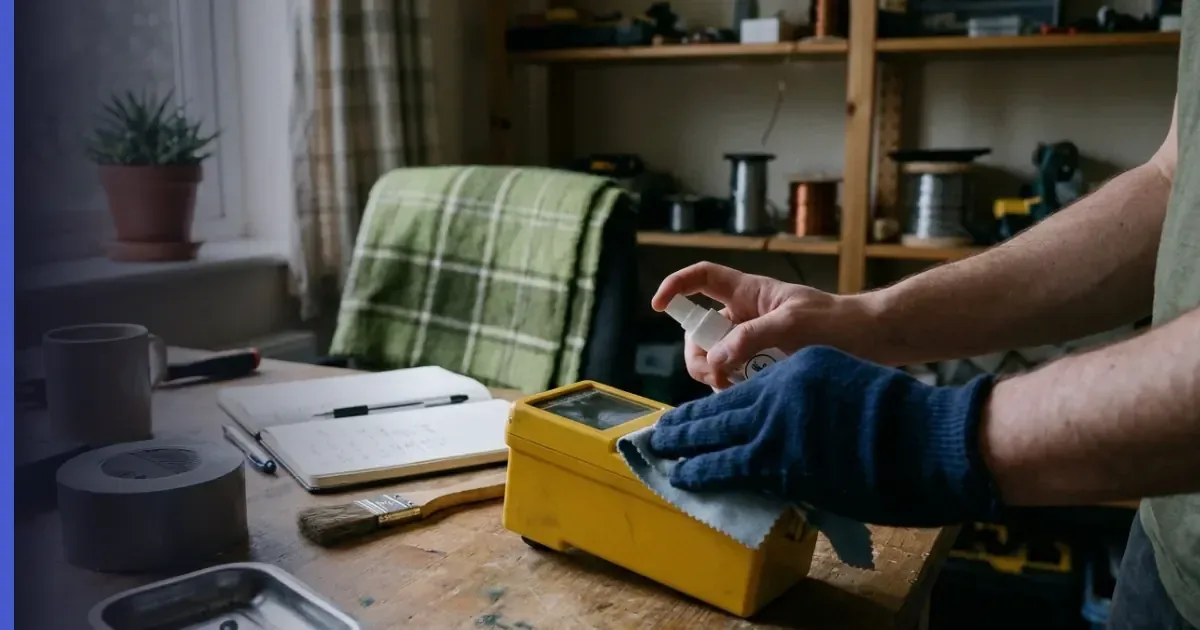
The outer casing collects dust and fingerprints, which can obscure displays and controls. Wipe the housing with a slightly damp lint-free cloth. Avoid spraying liquid directly onto the unit; moisture can seep into seams and damage electronics inside.
Check the seals around battery compartments and connection ports after each cleaning. Cracked or perished rubber lets humidity reach circuit boards. Replace damaged seals before storing the detector.
Remove surface contamination safely
If your detector has been used near radioactive materials, the housing may carry contamination. Wipe the exterior with a damp cloth and survey the cloth itself afterwards with a separate monitor or the detector once it is dry. A persistently elevated reading on the cloth confirms contamination was present.
Never use solvents, abrasive cleaners or bleach on detector housings. These chemicals can degrade plastic cases and attack protective coatings on metal surfaces.
Protect the detector window from scratches and punctures
Thin-window detectors, including pancake probes and alpha-beta monitors, have a fragile mica or metalized film that tears easily. Even small punctures allow ambient air into the detector chamber, which stops Geiger-Müller tubes from operating correctly.
Never touch the window with your fingers. Oils from skin leave residues that attract dust. If the window becomes visibly dirty, use a soft brush designed for camera lenses to lift particles without pressing them into the surface.
Store detectors with protective caps fitted over the windows. A cap prevents accidental contact during transport and keeps the window free from airborne contaminants.
Maintain correct battery contact and avoid leakage
Corroded battery terminals disrupt power delivery and cause intermittent operation. Remove batteries if the detector will not be used for more than a month. Leaked electrolyte damages circuit boards and requires professional cleaning.
Inspect battery compartments every few months. White or green deposits on contacts indicate corrosion. Clean affected terminals with a cotton bud dipped in white vinegar, then dry thoroughly before inserting fresh batteries.
Replace batteries according to the manufacturer's schedule even if the low-battery indicator has not appeared. Weak cells can leak without warning, and the cost of replacement batteries is far lower than the cost of circuit-board repair.
Store your detector in a stable environment
Extreme temperatures and high humidity degrade electronic components over time. Store the detector in a cool, dry location away from direct sunlight. A cupboard or drawer inside a climate-controlled room works well.
Avoid attics, garages and outbuildings where temperature swings are large. Scintillation detectors are particularly sensitive to thermal stress; sodium iodide crystals can crack if cycled repeatedly between hot and cold conditions.
Use padding during transport
Detectors contain delicate components that can dislodge or break if dropped. Carry the instrument in a padded case with foam inserts that hold it firmly in place. A hard-shell case protects against impacts better than a soft bag.
Secure the case during vehicle transport so it cannot slide or tip over. Loose instruments can roll off seats during sudden braking.
Follow a maintenance routine that fits how often you use the detector
Regular checks catch problems early, before they affect readings or cause component failure. The steps below form a practical schedule:
- After each field use: wipe the housing, inspect the window for damage and check that all controls move freely.
- Monthly: verify the detector responds to a check source at a consistent level; clean battery contacts if any discolouration appears.
- Every six months: remove and inspect batteries for signs of leakage; replace seals around compartments if they show cracks.
- Annually: arrange calibration verification through a qualified service to confirm the detector's response remains within specification.
Detectors used in dusty or contaminated environments need cleaning after every session. Those kept indoors and used occasionally may only require monthly attention.
Recognise when professional service is needed
Some maintenance tasks exceed what you can do safely at home. Erratic count rates, failure to respond to a check source or displays that flicker and fade all indicate internal faults.
Opening sealed detector chambers voids warranties and risks damaging components that require specialist tools to handle. Send the detector to a repair service approved by the manufacturer rather than attempting disassembly yourself.
If the window on a thin-window probe tears, replacement usually involves soldering and vacuum work. A professional repair costs less than a new probe and preserves the rest of the instrument.
Understand what cleaning methods damage which detector types
Different detector technologies tolerate different treatments. The table below matches common detector types to safe cleaning approaches:
| Detector type | Housing cleaning | Window care | Special notes |
|---|---|---|---|
| Geiger-Müller tube | Damp cloth, mild detergent | Soft brush only | Avoid shock and vibration |
| Scintillation detector | Damp cloth, no solvents | Lens cloth for optical window | Store away from temperature extremes |
| Ionisation chamber | Dry or barely damp cloth | Do not touch electrodes | Keep vents clear of dust |
| Semiconductor detector | Dry cloth only | Professional cleaning required | Never expose to moisture |
Ionisation chambers and semiconductor detectors are especially sensitive to contaminants. Follow the manufacturer's instructions exactly for these instruments.
Verify detector function before and after storage
A detector may drift out of specification during extended storage even if it suffered no physical damage. Testing your Geiger counter before putting it away establishes a baseline reading you can compare against when you retrieve it.
Place the detector near a check source and note the count rate. When you take the detector out of storage weeks or months later, repeat the measurement. A count rate within ten percent of the original value suggests the detector remained stable.
Large deviations indicate the detector may need recalibration. Internal components can age or moisture may have affected circuitry. Calibrating your radiation detector restores confidence in measurements after long periods of inactivity.
Start looking after your detector this week
Small actions prevent expensive repairs. Begin with what is easiest to do now and build the habit over time.
- Wipe down the housing and inspect the window for cracks or dirt buildup.
- Remove the batteries, check the contacts for corrosion and reinsert them if they are clean.
- Take a baseline reading with your check source and write the date and count rate in a maintenance log.
- Find a padded case or foam-lined box that fits the detector snugly and use it for every trip.
These steps take less than an hour and extend the working life of your instrument by years. Detectors that receive regular attention give reliable readings and rarely fail unexpectedly.
#Detector maintenance #Geiger counter #Radiation safety #Calibration
Download PDF: Radiation detector maintenance checklist PDF, 29 KB
Further reading
Frequently asked questions
How often should I clean my Geiger counter?
Wipe the housing after each field use and inspect the window for damage. Check battery contacts monthly and arrange calibration verification annually.
Can I use alcohol wipes to clean my radiation detector?
Avoid alcohol and other solvents on detector housings. Use a slightly damp lint-free cloth with plain water or mild detergent instead, as solvents can degrade plastics and protective coatings.
What should I do if my detector window gets torn?
Stop using the detector and send it to a professional repair service. Window replacement involves specialist tools and vacuum work that should not be attempted at home.