Understanding contamination monitors: the detector built for scanning surfaces
 Save
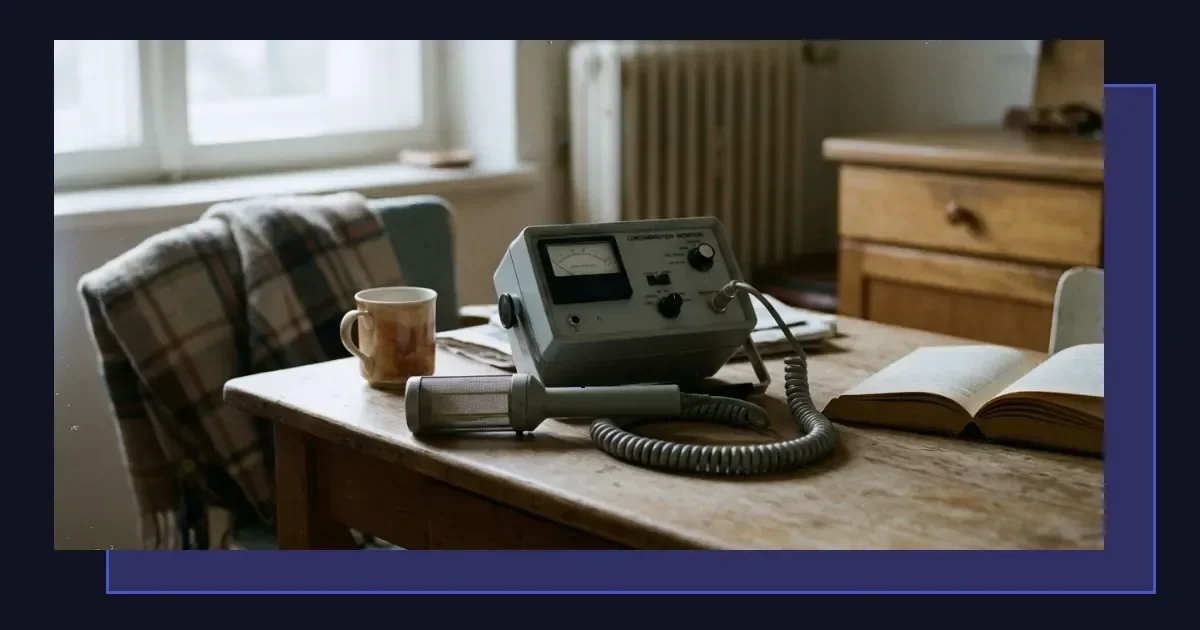
A contamination monitor is a radiation detector designed to find radioactive particles on surfaces, skin, clothing and equipment. Unlike dose rate instruments that measure radiation levels in the air around you, contamination monitors scan for material that has settled or spread. BIL Solutions explains how these instruments work and what makes them different from other detection equipment.
Recognising what contamination monitoring detects
Surface contamination means radioactive material resting on or clinging to an object rather than sealed inside it. A contamination monitor picks up emissions from particles too small to see. The detector responds to alpha and beta radiation that travel only short distances, so you hold the probe close to the surface being checked.
These instruments are particularly sensitive to beta particles, which penetrate the detector window but not thick shielding. Alpha particles are stopped by a sheet of paper, so detecting them requires a probe with an extremely thin entrance window that allows the particles through before they lose their energy.
Choosing the right probe for surface scanning
Most contamination monitors use a probe with a large, thin detection window. The pancake probe takes its name from its flat, circular shape and houses a Geiger-Müller tube with a mica window thin enough to admit alpha and beta particles. The wide surface area increases the chance of detecting small amounts of contamination spread over a workspace or garment.
Some instruments offer interchangeable probes: a pancake design for contamination work and a smaller energy-compensated probe for dose rate measurements. The probe you attach determines whether the instrument reports counts per minute from surface contamination or dose rate from the radiation field around you.
| Probe type | Window material | Main use | Radiation detected |
|---|---|---|---|
| Pancake | Thin mica | Surface contamination | Alpha, beta, gamma |
| End-window tube | Thin mica, smaller area | Contamination in tight spaces | Beta, gamma |
| Energy-compensated | Thick metal | Dose rate measurement | Gamma, X-ray |
| Side-window tube | Steel wall | High gamma fields | Gamma only |
Matching the window to the radiation type
Alpha contamination requires the thinnest window, often described by its density. A window too thick stops alpha particles before they reach the gas inside the tube. Beta emitters are easier to detect because the particles carry more energy and penetrate further. Gamma radiation passes through any detector window, but a contamination monitor optimised for gamma would miss the alpha and beta contamination it was built to find.
Scanning a surface properly
Hold the probe close to the surface without touching it. The detection efficiency drops sharply as distance increases, particularly for alpha and beta radiation. Move the probe slowly and steadily, allowing time for counts to register. Rushing the scan means you may pass over a contaminated spot before the instrument responds.
Listen for changes in the count rate rather than waiting for a specific number. A sudden increase as you move the probe suggests contamination in that area. You can then pause and take a longer measurement to confirm the reading. Background radiation produces a steady count, so you are listening for an increase above that baseline.
- Note the background count rate in an area you know is clean, holding the probe still for half a minute.
- Hold the probe within a centimetre of the surface being checked and move it at a speed that covers your hand's width each second.
- Mark any spot where the count rate rises noticeably above background and return to it for a static measurement.
- Record the highest reading and the location, then continue scanning the rest of the surface.
Interpreting what the meter shows
Contamination monitors typically display counts per minute rather than dose rate. A count represents one detection event: a particle entering the tube and ionising the gas inside. The number tells you how much radioactive material is present on the surface, not the dose you would receive from standing nearby. If you need to understand what count rate readings mean in different contexts, making sense of your detector's CPM readings covers the factors that shape every value.
Separating contamination from radiation fields
A dose rate meter measures the radiation reaching you from all directions, whether from a sealed source across the room or from contamination on a surface. A contamination monitor responds primarily to particles emitted within a few centimetres of the probe. You use it to find where radioactive material has settled, not to assess the hazard of standing in a radiation field.
In practice, this means a contamination monitor may show a high count rate when scanning a benchtop dusted with uranium oxide, while a dose rate meter in the same room reads only slightly above background. The contamination is not producing a significant radiation field at a distance, but it would transfer to your hands if touched. The tools answer different questions.
Maintaining detection efficiency over time
The thin window of a pancake probe is fragile. A torn or punctured window lets air into the tube and ruins it. Store the probe with its protective cap in place and avoid touching the window with your fingers or the surface being scanned. Some users keep a sheet of cling film over the window during routine surveys, replacing it when it becomes dirty.
Check that the instrument still responds by holding it near a check source before each survey. The count rate should match previous measurements, allowing for decay correction if the source is old. A sudden drop suggests the battery is low, the window is damaged, or the tube has reached the end of its working life. Testing your Geiger counter describes quick checks you can do today.
Recognising when the window needs replacing
A slow leak produces a gradual loss of sensitivity rather than a complete failure. The tube may still click near a strong source but miss low levels of contamination. Some instruments include a gas-pressure indicator, but most do not. If you suspect a leak, compare the background count rate with a known-good instrument of the same type in the same location. A lower count usually means a damaged window or a failing tube.
Deciding when you need a contamination monitor
You need this type of detector if your work involves handling unsealed radioactive materials, surveying areas where contamination might spread, or checking protective equipment after a task. Mineral collectors examining uranium specimens, laboratory technicians working with radioactive tracers, and decommissioning crews all use contamination monitors as part of their routine.
A general-purpose radiation detector with a side-window tube or energy-compensated probe is better suited to measuring ambient radiation fields, identifying radioactive rocks and minerals, or checking shielding effectiveness. If your concern is whether radioactive material has transferred to your hands, clothing or workspace, a contamination monitor with a pancake probe gives you the sensitivity you need.
Understanding alpha and beta sensitivity
Not all contamination monitors detect alpha radiation. A probe optimised for beta will have a window thick enough to block most alpha particles, making it useless for alpha emitters such as polonium or plutonium. Check the specification before purchasing: the window density is usually given in milligrams per square centimetre, and an alpha-sensitive window is below a certain threshold that allows the low-energy particles through.
Beta sensitivity varies with the energy of the emitter. High-energy beta particles from phosphorus or strontium penetrate the window easily, while low-energy beta from tritium or carbon may be stopped. If you work with specific isotopes, confirm that the instrument can detect them. The manufacturer's specification sheet lists the nuclides the detector responds to and the minimum detectable activity for each.
Applying contamination monitoring today
Start by defining the areas you need to check. Survey workspaces, tools and protective clothing after any task that could spread contamination. Keep a log of your measurements so you can spot trends over time. Even low levels of contamination become a concern if they increase with each survey, suggesting a control measure has failed.
Store your contamination monitor where it will not be damaged and where you can reach it quickly. The probe window is the most vulnerable part: treat it as carefully as the lens of a camera. With proper handling, a contamination monitor remains a reliable tool for years, giving you confidence that your workspace and equipment are free from radioactive material that could transfer to skin or be inhaled.
#Contamination monitor #Surface contamination #Geiger-Müller tube
Download PDF: Surface contamination scanning checklist PDF, 27 KB
Further reading
Frequently asked questions
What is the difference between a contamination monitor and a radiation detector?
A contamination monitor is designed specifically to scan surfaces for radioactive particles using a probe with a large, thin window that detects alpha and beta radiation at close range. A general radiation detector typically measures dose rate or ambient radiation fields rather than surface contamination.
How does a pancake probe work for surface contamination detection?
A pancake probe houses a flat Geiger-Müller tube with a thin mica window that allows alpha and beta particles to enter and ionise the gas inside. Its wide surface area increases detection efficiency when scanning large surfaces for small amounts of radioactive material.
Can a contamination monitor measure radiation dose rate?
Most contamination monitors display counts per minute from surface contamination rather than dose rate. Some instruments accept interchangeable probes, allowing you to switch between contamination scanning and dose rate measurement, but a single pancake probe cannot reliably measure both.